

Insurance is an operating expense landlords can no longer afford to overlook. Premiums have been skyrocketing, challenging the traditional beliefs real estate investors hold about choosing and managing assets. The current insurance crisis may worsen before it improves, and property owners who adapt quickly will develop the business acumen and resilience needed to weather future financial storms.
How Landlords Are Coping With Rising Rates
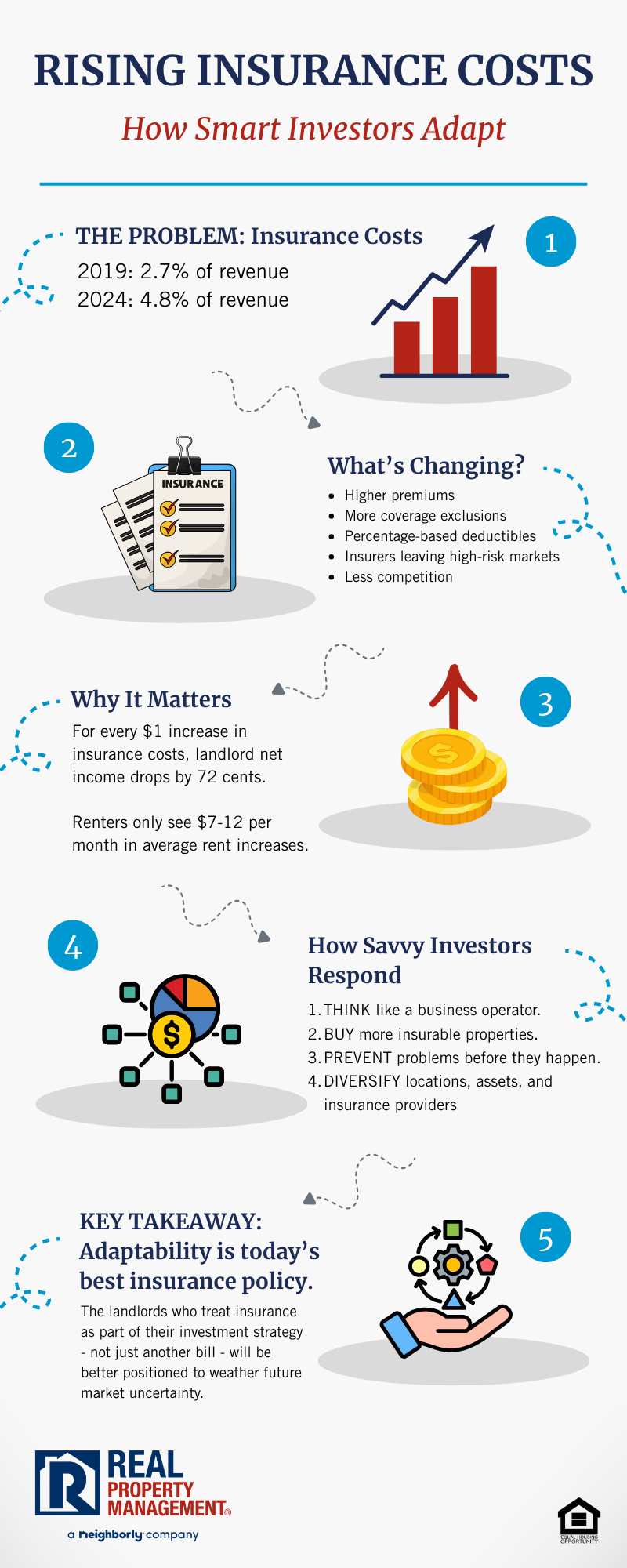
Multifamily insurance costs increased significantly from 2019 to 2024, eroding landlord profits during that period. As a percentage of revenue, costs went from 2.7% in 2019 to 4.8% in 2024. Heightened climate risk, chronic construction inflation, and soaring reinsurance expenses have been the primary drivers, a trend that persists in 2026 and may continue in the coming years. The Federal Reserve found little correlation between changes in insurance costs and asking rents, suggesting that rental rates could increase even if insurers sought higher compensation to reflect greater perceived risk. This finding is counterintuitive, as many would assume that landlords would pass through insurance cost hikes to existing tenants.
The truth is that there’s a relationship between building revenue growth and insurance premium spikes. The landlords’ net income decreases by 72 cents for every dollar increase in property insurance costs. Jumps in insurance costs since 2019 have increased average apartment renters’ rents by only $7 to $12 per month, which is less than 1% of the average rent. In other words, landlords have absorbed most of the financial burden.
Be that as it may, your tenants may eventually feel the pinch. Their sensitivity to rent increases primarily discourages you from charging more. You may fear it would push tenants to competitors, further impacting your cash flow due to prolonged vacancies. However, this concern will be less relevant once most landlords begin raising rents or deferring essential expenses, such as maintenance and capital improvements, as apartment owners in Seattle have done to offset surging premiums.

Why the Crisis Goes Beyond Soaring Rates
Ballooning premiums are just one of the many insurance-related problems real estate investors are contending with. More insurers are adding coverage limitations and expanding exclusions to mitigate risk while raising prices. As a result, you pay more money and get less value out of it. Deductible structures are also shifting from flat to percentage-based. Eye-watering weather-related losses and steadily rising property values have forced insurance carriers to take this route.
Demanding that policyholders pay a portion of the bill rather than a fixed amount signals that insurers expect future claims to be sizable but are unsure how high they can go. Percentage-based deductibles represent unpredictability, and an unexpectedly high out-of-pocket share can drain your reserves while reeling from disruption. Insurance companies are exiting markets deemed uninsurable. California is a high-profile example that has seen many insurers flee since 2021 due to destructive wildfires, rising business costs, and challenges in raising premiums. Other natural-disaster-prone states have also experienced a similar exodus. Some of the remaining ones have reduced their coverage or refuse to renew older properties.
Fewer insurers weaken competition. Negotiating for a more favorable rate is harder when there are fewer options.
What You Can Do to Prevent Losses
The insurance crisis has changed the status quo, rendering some tried-and-true real estate investment strategies less effective. Implement these tips to become a more sophisticated investor.

Think Like a Business Operator
Treat insurance as a risk management data point, not just another bill to pay. Use it to identify current and future financial threats and inform your decision-making. Regardless of how many doors you own, understand that you’re no longer in the rental business. Instead, recognize that you’re in a risk-adjusted return business. The question shifts from whether you can turn a profit to whether the amount of return you estimate to generate justifies the risk you have to endure. In a highly volatile environment, a predictable lower return is more desirable than a higher one with more uncertainty.
Select Properties More Carefully
Be averse to less insurable rentals to moderate your assets’ operating expenses. Many properties considered steals years ago may now be value traps, so be more cautious of pitfalls during bargain hunting. When acquiring new assets, do the “insurability test” before making any offer. Avoid taking any buildings at face value because some are in worse condition than they appear. Commercial property inspectors can thoroughly assess your prospective asset’s electrical, plumbing, HVAC and roofing systems, allowing you to uncover any secrets it may be hiding. Responsible property owners value recordkeeping. Sellers should be able to provide detailed maintenance logs, inspection reports and repair receipts, as accurate documentation supports proper risk assessment and fair premium calculations.
Mind the location. Even structurally sound, properly maintained buildings are constantly susceptible to weather damage if situated in flood zones, hail corridors, wildfire-prone areas or tropical cyclone basins.
Manage Risk Actively
Embrace proactive and preventive maintenance approaches. The former refers to efforts to address the root causes of failure, while the latter pertains to scheduled inspections. Proactive maintenance relies on real-time data to catch red flags early, and preventive maintenance depends on fixed intervals based on time and usage. Although both methods entail recurring costs and slightly increase your operating expenses, they minimize the risk of emergency damage. Reactive spending is less predictable and controllable.
Diversify Your Investments
Reduce your risk exposure by investing in different locations, owning distinct real estate assets, and using various insurance providers. Such a portfolio translates into a conservative or moderate risk profile. This strategy may lower the reward on paper, but it can yield more predictable, stable, and sustainable returns.
Selecting breadth over depth is less risky, but acquiring a wide range of assets in diverse markets comes with unique challenges, such as local economic cycles, confusing regulations, and unfamiliarity with demographic shifts. Avoid diversifying your investment for the sake of diversification. Betting your capital on unknown domains is a gamble, not a calculated risk.
Adaptability Insures You Against Uninsurability
The insurance crisis is a skill filter, separating casual landlords who are just collecting rent from sophisticated investors who are running a business. Insurance premiums aren’t going to rise rapidly forever, and those who ride out the storm are property owners who can adapt to the prevailing landscape and prepare for the future.
This content is provided for general informational and educational purposes only and does not constitute financial, legal, tax, or investment advice. Readers should consult with licensed professionals regarding their specific circumstances.
We are pledged to the letter and spirit of U.S. policy for the achievement of equal housing opportunity throughout the Nation. See Equal Housing Opportunity Statement for more information.
